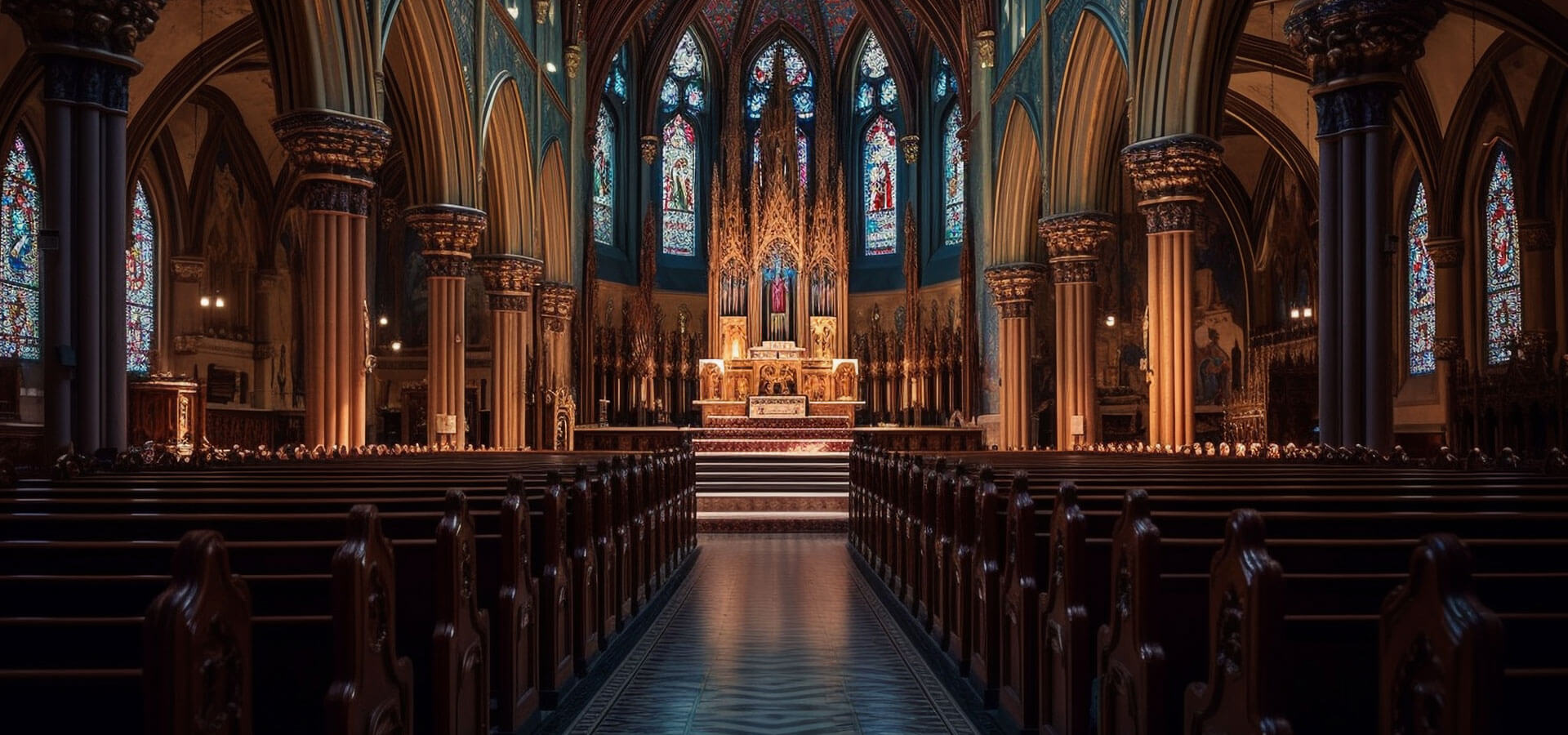
A Brief History
The term “Black Madonna” refers to statues or paintings of the Virgin Mary and the Christ Child that are dark-skinned. Some theories connect Black Madonnas to ancient pre-Christian goddesses and earth deities, representing the fertile, dark earth and the generative power of the feminine. This resonates well with traditions that embrace a more expansive understanding of the Divine Feminine. This particular depiction of the Black Madonna is merged with the iconography of Our Lady of Perpetual Help, which complements the resilience, resistance to injustice, and generative power of the feminine captured in the Black Madonna with the nourishing, welcoming, comforting embrace of our Lady of Perpetual Help.
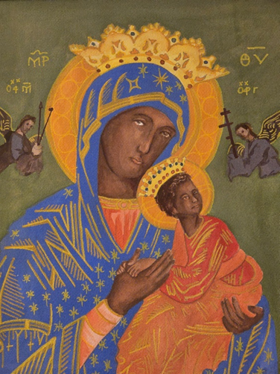
Symbol of Resilience and the Marginalized: Historically, Black Madonnas have often been associated with places of pilgrimage, healing, and protection, particularly for marginalized communities. Their dark complexion can symbolize solidarity with those who are “othered,” oppressed, or considered outside the dominant norm.
“Black but Comely”: A common interpretation links the Black Madonna to the Song of Solomon 1:5, “I am black but comely.” This verse is often seen as celebrating a divine beauty that transcends conventional standards and embraces a deeper, spiritual radiance.
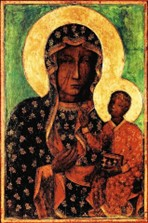
Miraculous Intercession: Many Black Madonnas are associated with miracles and protection, particularly during times of conflict or hardship. For example, Our Lady of Czestochowa (Poland) is famous for its miraculous defense during invasions.
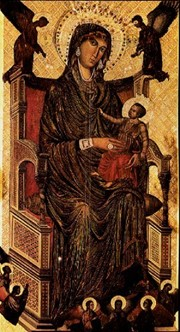
Montevergine and LGBTQ+ Affinity: Notably, the Madonna of Montevergine in Italy has a long-standing association with LGBTQ+ individuals. Legend tells of her miraculous intervention to save two gay men from homophobic violence in the 13th century. This has made Montevergine a significant pilgrimage site for LGBTQ+ Catholics and allies, demonstrating a historical precedent for the Black Madonna as a patron of those often excluded by mainstream religious institutions.
For welcoming and affirming progressive faith traditions the Black Madonna can represent:
- A challenge to patriarchal and colonial narratives: Her dark skin can be seen as a subversion of idealized, often Eurocentric, images of Mary.
- Embracing the sacred in all forms: Her connection to ancient earth traditions and her solidarity with the marginalized affirm the sacredness of all people and creation.
- Divine inclusivity and radical love: Her association with figures like the Montevergine Madonna highlights a divine love that embraces all, regardless of gender identity or sexual orientation.
Resources for Further Exploration:
- “God is a Black Woman” Christina Cleveland, PhD: In this timely, much-needed book, theologian, social psychologist, and activist Christena Cleveland recounts her personal journey to dismantle the cultural “whitemalegod” and uncover the Sacred Black Feminine, introducing a Black Female God who imbues us with hope, healing, and liberating presence. Available on Amazon
- “Race, Religion and the Black Madonna” (Welcome Collection): This article provides a good overview of the history and various interpretations of Black Madonnas.
- “Madonna of Montevergine: Patron of LGBTQ people since medieval times” (Q Spirit): This is an excellent resource for understanding the specific connection between a Black Madonna and the LGBTQ+ community and can be very affirming for your tradition.
- “The Black Madonna for Racial Liberation” (ThinkND – University of Notre Dame): While from a Catholic university, this discusses the Black Madonna as an “icon of resistance” and affirming the sacredness of all people, including Black women and Black trans women – themes highly relevant to our shared values.